What does ERW mean?
ERW means electric resistance welded. In steel tube production, it describes a welded tube or pipe made from steel strip, where the strip edges are heated and joined along a continuous longitudinal seam.
In modern welded pipe factories, high-frequency welding is commonly used during ERW tube mill production. Buyers may still use different search terms such as ERW pipe, ERW tube, ERW tubing or ERW steel tube, but they are usually talking about welded steel tube made from coil or strip.
Quick answer: what is ERW tubing?
ERW tubing is steel tubing made by forming flat steel strip into a tube and welding the edge seam. It is different from seamless tube because ERW tubing has a welded seam, while seamless tube is produced by another manufacturing route.
For a pipe factory, the practical question is not only the meaning of ERW. The buyer needs to know whether the planned ERW tube mill line can produce the target outside diameter, wall thickness, material grade, pipe length and application required by the local market.
What is ERW tube?
ERW tube is a steel tube produced by forming steel strip into a tubular shape and welding the seam. The tube can be round, and it can also be further shaped into square or rectangular tube depending on the production route.
For pipe factories, ERW tube is widely used because the process is suitable for continuous production. A properly planned ERW tube mill line can support stable forming, welding, sizing, cutting and finished tube handling.
ERW pipe, ERW tube and ERW tubing
In many markets, the words pipe, tube and tubing are used differently. Pipe is often linked to nominal pipe size and fluid or structural applications, while tube is often linked to outside diameter, shape and fabrication use.
For equipment selection, the important point is not only the wording. Buyers should confirm finished tube shape, outside diameter, wall thickness, material, pipe length, tolerance requirement and final application before asking for a machine quotation.
What is ERW steel?
When buyers search for ERW steel, they usually mean steel pipe or steel tube made by the ERW welding process. The raw material is commonly carbon steel strip, galvanized steel strip, hot rolled steel strip or cold rolled steel strip, depending on the final product requirement.
The material grade, strip thickness and strip width affect forming load, welding condition, roll tooling and final pipe quality. These details should be reviewed before confirming an ERW pipe production line.
What is ERW steel tube used for?
ERW steel tube is widely used for construction pipe, scaffolding pipe, furniture tube, greenhouse pipe, fence tube, structural tube and many fabricated steel products. Different applications may require different tube size, wall thickness, surface condition and pipe length.
This is why overseas buyers should describe the target application when requesting a machine quotation. A tube mill line for light furniture tube is not selected in the same way as a welded pipe production line for heavier structural tube.
How ERW steel tube is produced
A typical ERW tube production process starts with steel coil preparation. The strip is uncoiled, joined if needed, accumulated, formed into shape, welded by high-frequency welding, cooled, sized, cut by flying saw and transferred to the run-out table.
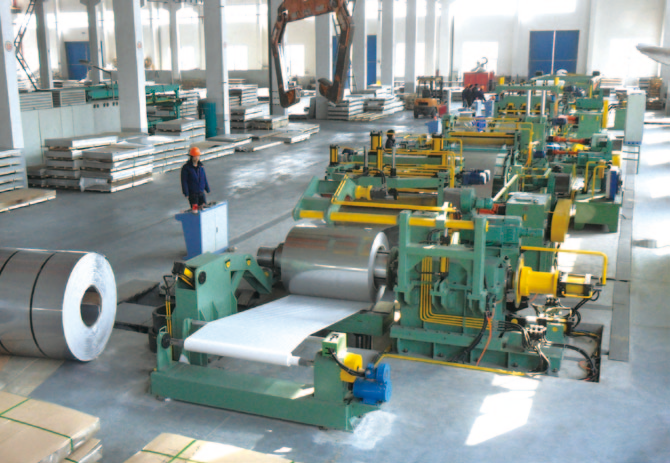
For a complete factory project, the production system may also include a steel coil slitting line, roll tooling, auxiliary equipment, packing system and workshop layout planning.
Is ERW tube seamless?
ERW tube is not seamless tube. It is a welded tube made from steel strip, with a welded seam along the length of the pipe. Seamless tube is produced by a different process and is used for different requirements.
For many construction, scaffolding, furniture, greenhouse, structural and general industrial applications, ERW welded tube is practical and widely used. The right choice depends on product standard, pressure requirement, application and buyer market.
Common applications of ERW tube
ERW tube can be used for construction pipe, scaffolding pipe, furniture tube, greenhouse pipe, structural tube, fitness equipment tube, fence tube and many fabricated steel products.
If the factory mainly sells round welded steel pipe, the project can start from an ERW tube mill line. If square and rectangular tube are important products, the buyer should also compare a normal round-to-square route with a direct forming square tube mill route.
What affects ERW tube quality?
ERW tube quality depends on strip preparation, forming stability, welding power, roll tooling, squeeze condition, cooling, sizing accuracy and cutting synchronization. Operator experience and line adjustment also matter.
A useful machine proposal should not only list a model name. It should connect the equipment configuration with the buyer pipe size range, wall thickness, material, output target and workshop condition.
How the ERW tube mill line matters
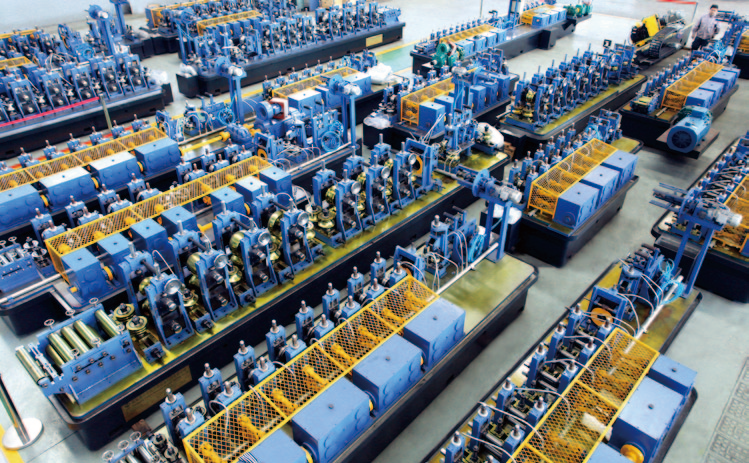
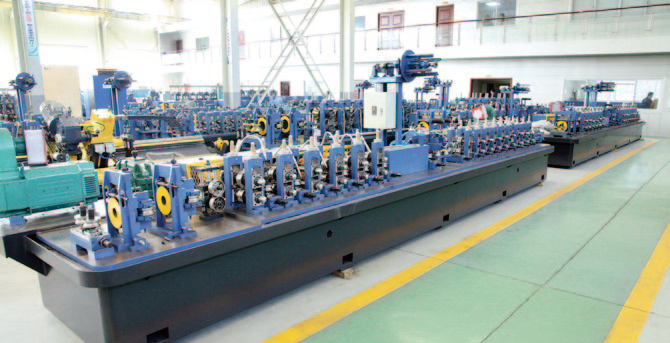
The ERW tube mill line is the core production equipment for welded tube manufacturing. It usually includes uncoiler, shear and butt welder, accumulator, forming mill, high-frequency welding system, cooling section, sizing mill, flying saw cutting machine and run-out table.
For overseas buyers, the line should be selected according to pipe OD, wall thickness, material, line speed expectation, application and installation condition. If some parameters are not confirmed yet, they can be marked as to be confirmed based on project requirements.
From search question to equipment decision
Many buyers start by searching what is ERW pipe or what is ERW tubing, but the next decision is usually equipment selection. If the factory wants to produce ERW welded pipe in-house, the project should move from definition to pipe product range, production route and line configuration.
A useful first inquiry should include pipe OD, wall thickness, steel strip material, pipe length, target application, expected capacity and workshop layout. These details help the supplier recommend whether a standard ERW tube mill line, a steel pipe making machine package, a direct forming square tube mill or a complete tube mill solution is more suitable.
Buyer information needed for a quotation
Before requesting a quotation, prepare tube shape, outside diameter or square and rectangular size, wall thickness, material, pipe length, target application, expected capacity, workshop layout and whether this is a new factory or an existing line upgrade.
With this information, the supplier can review whether the project needs an ERW tube mill line, steel pipe making machine, direct forming square tube mill, steel coil slitting line or a more complete tube mill solution.
For equipment selection, visit ERW Tube Mill Line, Steel Pipe Making Machine, Direct Forming Square Tube Mill, Steel Coil Slitting Line or Tube Mill Solutions.