Why strip preparation matters before ERW tube mill production
An ERW tube mill line does not normally use a wide steel coil directly. The coil must be slit into narrower strips that match the target pipe size, wall thickness and forming route.
If strip width is not stable, the downstream welded pipe production line may face forming difficulty, unstable weld seam position, more adjustment time and higher material waste. For this reason, many pipe factories plan a steel coil slitting line together with the tube mill project.
What a steel coil slitting line does
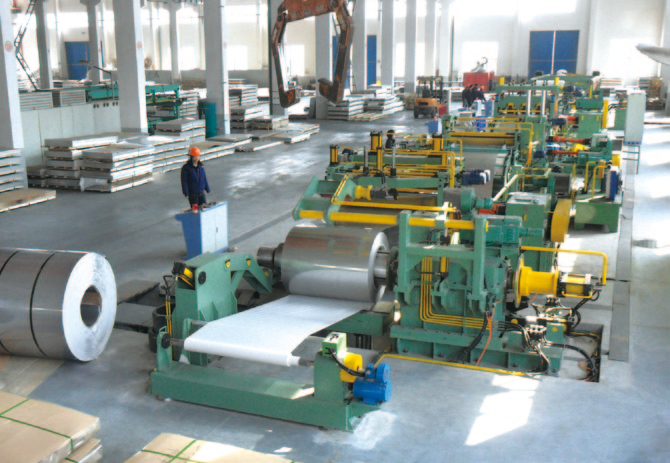
A steel coil slitting line cuts wide steel coils into several narrow strips and recoils them for later tube mill feeding. The typical process includes coil loading, uncoiling, guiding, slitting, scrap edge winding, tension control and recoiling.
For tube mill buyers, the purpose is not only cutting steel. The real goal is to prepare clean strip edges, correct strip width and stable recoiled strips so the ERW pipe mill can run with fewer interruptions.
How strip width affects welded pipe quality
Strip width is linked to pipe outside diameter, wall thickness, forming method and weld allowance. If the strip is too narrow, the edges may not meet correctly before high-frequency welding. If it is too wide, forming load and squeeze condition may become difficult to control.
A practical tube mill project should review pipe size and strip width together. Buyers should avoid treating the slitting line and ERW tube mill as two separate decisions, especially for a new pipe factory.
Main equipment in a coil slitting line
A common coil slitting line may include coil car, uncoiler, pinch and leveling unit, side guide, slitting machine, scrap winder, tension station, recoiler, hydraulic system and electrical control system.
The final equipment scope should be confirmed based on coil width, coil thickness, coil weight, material, strip width, number of strips and required line speed. If the factory has limited space, layout planning should be reviewed before confirming the machine direction.
Key technical data buyers should prepare
Before requesting a quotation, prepare coil material, coil thickness range, coil width range, maximum coil weight, required strip width, number of strips, slitting accuracy requirement and target line speed.
If some data is not confirmed yet, mark it as "to be confirmed based on project requirements". A supplier can then review the tube mill plan and suggest a realistic steel slitting machine configuration.
Match coil weight, ID and OD to material handling
Maximum coil weight affects the coil car, uncoiler mandrel, braking system, foundation load and crane handling plan. Buyers should also confirm coil inner diameter and approximate outer diameter so the loading and expansion ranges match the real raw material supply.
For heavier coils, the quotation should explain the coil loading method and the strength direction of the uncoiler and recoiler. These details are part of safe, stable production rather than optional accessories.
Recoiling quality and tension control
The finished strip coils should be neat, tight and easy to feed into the tube mill. Loose recoiling, side shifting, telescoping or uneven tension can create storage, lifting and downstream uncoiling problems.
When comparing suppliers, ask how the tension station, guiding system and recoiler support stable strip alignment. Good recoiling quality helps the ERW tube mill run with fewer material interruptions.
Workshop layout and material flow
Coil loading, finished strip unloading, strip storage and tube mill feeding should be planned as one material flow. Buyers should provide workshop length, width, crane capacity, door position and the planned tube mill location when available.
A layout review before ordering can prevent expensive handling problems after installation, especially when one slitting line supplies several welded pipe production lines.
When a pipe factory needs its own slitting line
A factory may need its own slitting line when it buys wide coils, produces many pipe sizes, wants better control over strip inventory or needs to reduce dependence on outside slitting service.
For smaller production volume, outsourcing slitting may be enough at the beginning. But for a growing welded pipe factory, an in-house coil slitting line can improve material planning and make the ERW tube mill production schedule easier to control.
Connection with ERW tube mill line selection
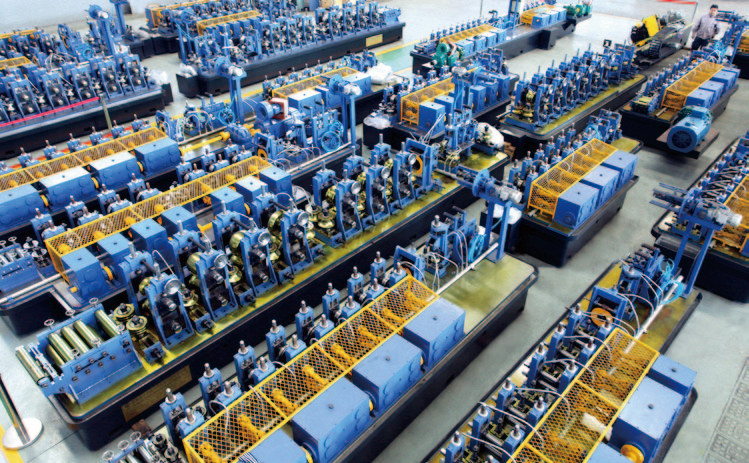
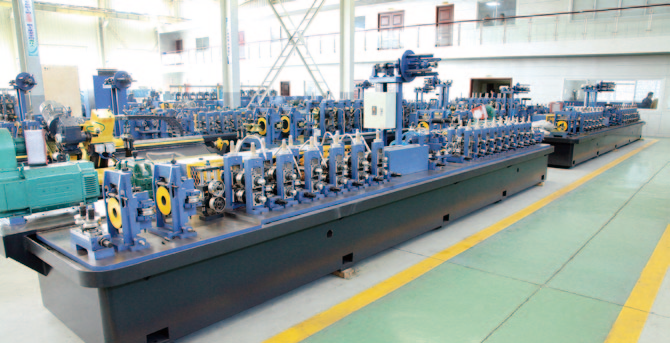
The slitting line should support the real pipe product plan. If the main project is an ERW tube mill line for round welded steel pipe, the strip width list should be prepared from the round pipe OD range and wall thickness range.
If the factory also produces square or rectangular tube, the supplier should review whether the tube mill uses round-to-square forming or a direct forming square tube mill route. This affects tooling planning, strip preparation and future size changes.
Common mistakes when buying a steel slitting machine
One common mistake is only asking for a low machine price without confirming coil weight, thickness range, slitting accuracy and recoiling quality. A cheaper configuration may not match the real coil condition used by the pipe factory.
Another mistake is ignoring workshop flow. Coil loading, finished strip storage and tube mill feeding should be planned together, otherwise operators may spend too much time moving material inside the factory.
Buyer checklist before requesting a slitting line proposal
Send coil material, coil thickness, coil width, coil weight, required strip width, number of strips, slitting accuracy, target line speed, workshop drawing and whether the slitting line will serve one tube mill or multiple welded pipe production lines.
For a complete pipe factory project, also send the target pipe size, wall thickness, application and expected output. This allows the engineering team to check the coil slitting line and ERW tube mill line as one production system.
For equipment selection, visit ERW Tube Mill Line, Steel Pipe Making Machine, Direct Forming Square Tube Mill, Steel Coil Slitting Line or Tube Mill Solutions.