Square vs round tube at a glance
Round tube has a continuous curved surface and is commonly selected for pipe, bending, fluid flow and applications where loads can come from several directions. Square tube has flat faces and corners, making it convenient for frames, straight connections, drilling, welding and fabrication. Neither shape is universally stronger or cheaper; the correct comparison depends on dimensions, wall thickness, steel grade, load direction and connection design.
For pipe factory owners, the decision is more important because one production line may need to serve many customers. Before ordering a new ERW tube mill line or square tube mill, the factory should understand which tube shapes will become the main products and which shapes are only occasional orders.
Round tube: common applications and advantages
Round welded steel pipe is widely used for construction pipe, scaffolding pipe, greenhouse pipe, general structural pipe, furniture tube and many industrial applications. The round shape is easy to handle in continuous ERW forming and is often the starting point for welded pipe production.
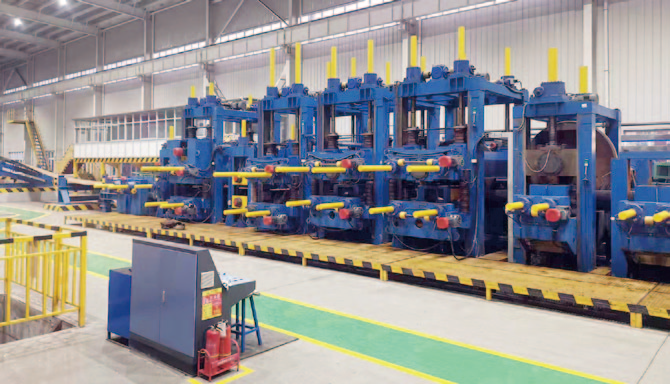
A factory focused mainly on round pipe usually considers an ERW tube mill line. The line can be planned according to pipe outside diameter, wall thickness, material, target output, pipe length and workshop layout.
Square tube: common applications and advantages
Square tube is common in frames, furniture, racks, fencing, fitness equipment, light structures and fabrication work. The flat sides make it convenient for cutting, welding, drilling and assembly.
If square tube and rectangular tube are important products, buyers should not only ask whether the machine can make square tube. They should also ask how the square tube will be formed, how many roll sets are needed and how often the factory expects to change sizes.
Structural and fabrication differences
Round tube is often preferred when smooth appearance, bending, rotation, fluid flow or general pipe applications are important. Square tube is often preferred when flat surfaces, easy connection and frame assembly are more important.
There is no single better shape for every project. The right choice depends on load direction, connection method, surface requirement, local market demand and downstream processing.
How tube shape affects tube mill selection
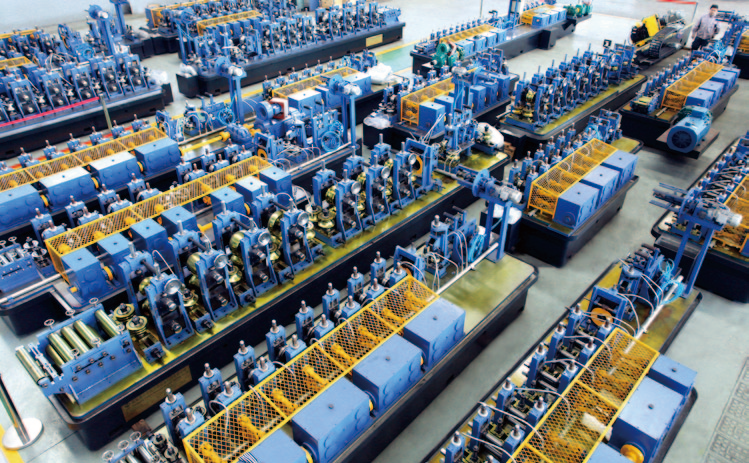
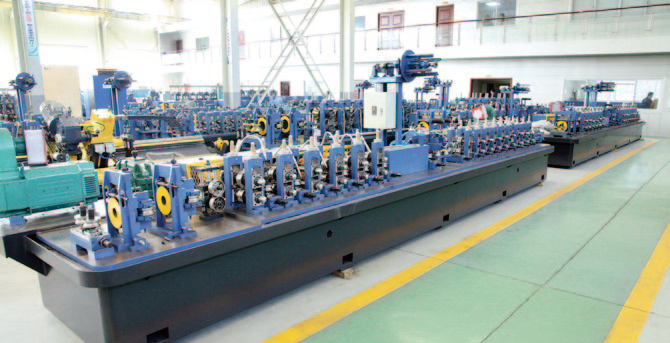
Tube shape directly affects the production route. Round welded pipe is normally produced by an ERW tube mill line. Square and rectangular tube can be produced by a normal round-to-square route or by a direct forming square tube mill route.
This is why a useful machine proposal should start from the product table. Buyers should prepare the tube shape, round pipe OD, square or rectangular size, wall thickness, material, pipe length and target application before asking for a quotation.
Round-to-square forming route
In a round-to-square route, the strip is first formed and welded as a round pipe, then shaped into square or rectangular tube through sizing and shaping stands. This route is common when a factory needs round pipe production and also produces square or rectangular tube.
The advantage is flexibility for factories that have mixed product demand. The buyer should still confirm tooling scope, size change method, dimensional tolerance requirements and whether the final tube quality meets the target market.
Direct forming square tube mill route
A direct forming square tube mill forms square or rectangular tube more directly instead of relying on a complete round-to-square process. It is often considered when square and rectangular tube are the main production direction and size change efficiency is important.
This route may reduce some tooling pressure for frequent square and rectangular tube production, but the final selection depends on size range, wall thickness, material, product mix and budget. Buyers should compare it with the normal ERW round-to-square route before confirming the machine plan.
Tooling and size change considerations
Roll tooling is one of the key cost and operation factors in welded tube production. A factory with many tube sizes should discuss tooling plan early, because future size changes can affect production downtime, operator workload and spare tooling budget.
When comparing square vs round tube production, buyers should ask which roll sets are required, which sizes may share tooling and what changes are needed when moving from one product size to another.
Buyer checklist before choosing the production route
Prepare a clear list of round pipe OD, square tube size, rectangular tube size, wall thickness, steel strip material, target pipe length, application, expected line speed and annual production target. If some values are not fixed yet, mark them as to be confirmed based on project requirements.
Also prepare the workshop length, crane height, power supply condition, raw material flow and finished pipe handling plan. These details help the engineering team judge whether a standard line layout is enough or a customized layout is needed.
Which route is better for a new pipe factory
If the new factory mainly sells round welded steel pipe, an ERW tube mill line is usually the first route to review. If the market strongly demands square and rectangular tube, the buyer should compare a normal round-to-square route with a direct forming square tube mill.
For overseas buyers, the best next step is to send the product table and workshop information to the tube mill manufacturer. A practical supplier can then recommend a production route, equipment scope, tooling direction and quotation plan based on the real project.
For equipment selection, visit ERW Tube Mill Line, Steel Pipe Making Machine, Direct Forming Square Tube Mill, Steel Coil Slitting Line or Tube Mill Solutions.