Why ERW tube mill line specifications matter
When overseas buyers compare an ERW tube mill line, the specification sheet is often the first document they ask for. But a useful specification is not only a list of machine numbers. It should explain whether the line can match the buyer pipe product, raw material, workshop condition and production target.
A good ERW pipe mill specification helps both sides avoid misunderstanding. The buyer can check whether the proposed welded pipe production line fits the market plan, and the manufacturer can prepare a more accurate technical proposal instead of sending a general machine price.
Start with pipe OD and tube shape
Pipe OD is one of the first specifications to confirm. For round welded pipe, buyers should prepare the required outside diameter range. If square or rectangular tube is also needed, the buyer should list the square and rectangular tube sizes separately.
Do not only say that the factory wants a small, medium or large tube mill. Different suppliers may understand these words differently. A clear pipe size table is much more useful for selecting the right ERW tube mill model.
Wall thickness affects machine strength and welding plan
Wall thickness affects forming load, welding power direction, sizing stability, cutting system and total equipment strength. A line for thin furniture tube is not selected in the same way as a welded pipe production line for heavier structural tube.
If the full wall thickness range is not confirmed yet, mark it as to be confirmed based on project requirements. The supplier can then review a practical range and explain what information is still needed before final model selection.
Material and steel strip condition
Common raw materials may include hot rolled steel strip, cold rolled steel strip, galvanized steel strip or other carbon steel strip based on the final application. The material affects forming behavior, welding stability, roll tooling and surface protection.
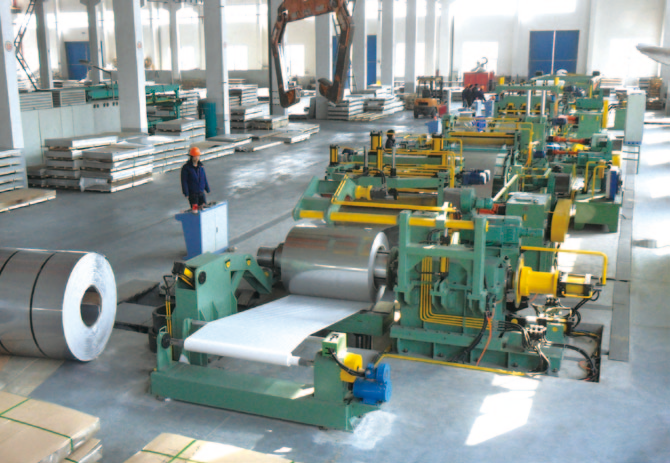
Buyers should also confirm whether they will purchase slit strip directly or install a steel coil slitting line in the factory. Strip width, coil weight and coil handling method should be considered together with the ERW tube mill line.
Line speed and real production capacity
Line speed is important, but buyers should not compare only the highest speed number. Real output depends on pipe OD, wall thickness, material, pipe length, cutting method, welding condition, size change frequency, operator skill and shift plan.
A responsible proposal should explain that line speed may be to be confirmed based on project requirements. It is better to discuss expected capacity together with the actual pipe product table instead of using one speed number for every product.
Main equipment scope in the specification
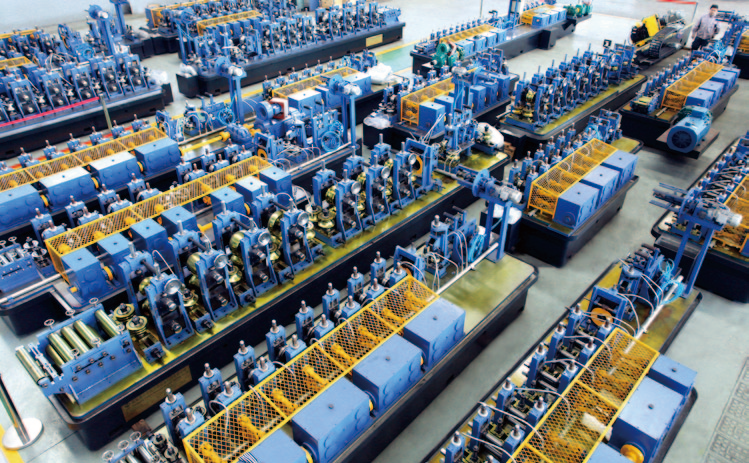
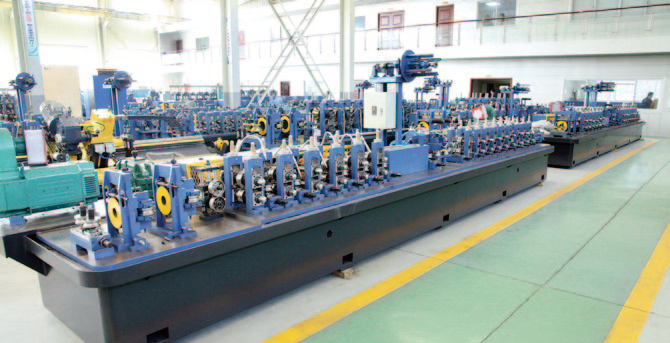
A complete ERW tube mill line specification should normally mention uncoiler, shear and butt welder, accumulator, forming mill, high-frequency welding system, cooling section, sizing mill, flying saw cutting machine, run-out table, electrical control and tube mill rolls.
Buyers should ask which equipment is included in the base quotation and which items are optional. This is important because two quotations with the same title can have very different scopes.
Roll tooling and size change plan
Tube mill rolls are not a small accessory. They affect forming stability, pipe quality, surface condition and changeover workload. A buyer with many pipe sizes should discuss the roll tooling plan before confirming the machine order.
For square and rectangular tube, buyers should also compare a normal round-to-square route with a direct forming square tube mill route. The better choice depends on product mix, tooling budget, size change frequency and whether shaped tube is the main product.
Workshop layout requirements
The ERW tube mill layout should fit the real factory, not only the machine brochure. Buyers should confirm workshop length, width, crane height, foundation condition, power supply, coil loading direction, finished pipe handling and operator space.
A simple workshop drawing is very useful. It helps the engineering team check whether there is enough space for the mill line, run-out table, raw material movement, maintenance access and future expansion.
Electrical control and automation level
Electrical control and automation level should be matched with the buyer production plan and local operator experience. Higher automation may help daily operation, but the final configuration should still match the factory budget, maintenance ability and output target.
Buyers can ask the supplier to explain the main control system, speed control, cutting synchronization, safety protection and basic operation interface. The final configuration may be to be confirmed based on project requirements.
Cutting system and pipe length
Pipe length affects cutting system selection and finished pipe handling. A flying saw cutting machine is commonly used in ERW tube mill production, but the detailed configuration should match pipe OD, wall thickness, line speed and required pipe length.
When requesting a quotation, send the common pipe length and length tolerance requirement if available. This helps the supplier review whether the proposed cutting and run-out table arrangement is suitable.
What a useful specification table should include
A useful specification table should include model direction, round pipe OD range, square or rectangular tube range if needed, wall thickness range, material, line speed direction, pipe length, main equipment scope, power requirement direction and workshop layout requirement.
If the supplier cannot confirm a parameter without more project details, it is better to write to be confirmed based on project requirements. This is more professional than inventing a number that may not fit the buyer factory.
Information buyers should send before quotation
Before asking for an ERW tube mill line quotation, prepare tube shape, pipe OD, square or rectangular tube size if needed, wall thickness, material, pipe length, target application, expected capacity, workshop drawing and whether this is a new factory or an existing pipe mill upgrade.
If the buyer also needs steel coil slitting, auxiliary equipment, roll tooling, spare parts, packing support or overseas installation service, these points should be included in the first inquiry. This helps the manufacturer prepare a complete welded pipe production line scope.
How to compare ERW pipe mill specifications from different suppliers
Do not compare only model name and total price. Compare pipe range, wall thickness, material direction, forming method, welding system, cutting system, roll tooling scope, electrical control, auxiliary equipment, installation support and after-sales service.
For overseas buyers, the best specification is the one that clearly connects the machine configuration with the real factory project. A practical proposal should make it easier to understand what the line can produce, what is included and what still needs to be confirmed.
For equipment selection, visit ERW Tube Mill Line, Steel Pipe Making Machine, Direct Forming Square Tube Mill, Steel Coil Slitting Line or Tube Mill Solutions.