Why overseas buyers search for China ERW pipe mill suppliers
Many pipe manufacturers look for China ERW pipe mill suppliers because China has a mature supply chain for welded pipe production equipment, roll tooling, machining, electrical control and auxiliary machines.
The real challenge is not finding a supplier name. The harder job is judging whether that supplier can understand the pipe products, recommend the right ERW tube mill line, prepare a clear equipment scope and support the project after shipment.
For overseas buyers, this decision affects factory layout, production stability, operator training, delivery schedule and long-term maintenance. A cheaper first quotation can become expensive if the line configuration is wrong.
Start with the pipe products, not the machine name
A serious ERW pipe mill project should start from the finished pipe plan. Before comparing suppliers, prepare the round pipe OD range, wall thickness range, pipe length, steel strip material, target application and expected production capacity.
If the factory also needs square or rectangular tube, explain whether these products are occasional orders or the main business direction. This affects whether the project should use a normal ERW round-to-square route or consider a direct forming square tube mill.
Buyers do not need to know every technical detail before contacting the manufacturer. But the more clearly the product plan is described, the easier it is for the supplier to prepare a useful welded pipe production line proposal.
Fast shortlist checklist for China ERW pipe mill suppliers
Before spending too much time comparing prices, buyers can use a simple shortlist check: real factory background, pipe range review, complete equipment list, roll tooling plan, workshop layout support, export packing, installation support and clear after-sales communication.
A supplier that can answer these points clearly is usually easier to work with than a company that only sends a model name and a low price. For an overseas pipe factory project, communication quality and technical clarity are part of the real value.
The best first reply from a supplier should not be only "yes, we can make it". It should ask for pipe OD, wall thickness, material, application, expected output and workshop condition so the equipment route can be reviewed properly.
Check whether the supplier understands the complete welded pipe line
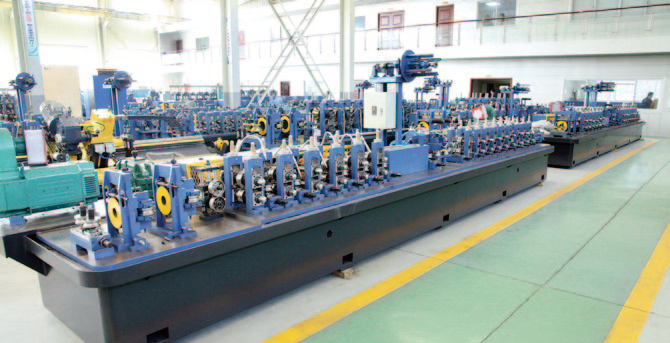
A reliable ERW pipe mill supplier should be able to explain the complete welded pipe production line, not only the main mill body. A typical line may include uncoiler, shear and butt welder, accumulator, forming mill, high-frequency welding system, cooling section, sizing mill, flying saw cutting machine and run-out table.
The supplier should also discuss steel coil preparation, strip width, roll tooling, spare parts, electrical control, installation requirements and operator training. These details decide whether the line can run smoothly after it reaches the buyer factory.
If a quotation only says one simple machine model without line scope, the buyer cannot compare it fairly with another offer. Always ask what is included, what is optional and what needs to be quoted separately.
Look for real manufacturing capability
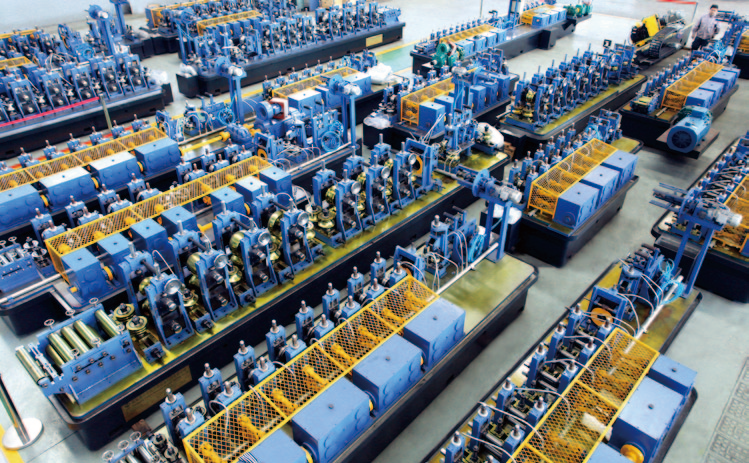
For industrial machinery, real manufacturing capability matters. A tube mill manufacturer with in-house machining, roll tooling processing, assembly and inspection is usually able to explain equipment details more clearly than a company that only resells machines.
When checking a China tube mill manufacturer, pay attention to factory location, workshop scale, machining capacity, roller processing, assembly process, quality control, patents, certificates and export experience.
Zhangjiagang Zhongyue Metallurgy Equipment Co., Ltd. is located in Zhangjiagang, Jiangsu, China. The factory background, manufacturing space, annual production capacity, patents and ISO quality management help overseas buyers understand that the project is supported by a real industrial machinery manufacturer.
Engineering support before quotation
A good supplier should ask questions before giving a final price. The engineering team needs to understand the pipe size range, wall thickness, material, capacity target, workshop layout and production route before recommending the machine configuration.
For a new pipe factory, the supplier should help review line direction, raw material flow, finished pipe handling, crane height, foundation condition, power supply and space for operators. For an existing factory upgrade, the supplier should understand what equipment is already available and what needs to be replaced.
This early communication saves time. It helps avoid a quotation that looks attractive on paper but does not match the real production conditions.
Technical points to confirm with each supplier
When comparing China ERW pipe mill suppliers, ask each supplier to confirm the pipe OD range, wall thickness range, suitable material, line speed, welding power direction, cutting method, roll tooling scope and electrical control system.
If a parameter is not confirmed yet, it is better to write "to be confirmed based on project requirements" instead of accepting a random number. For customized tube mill machinery, technical parameters should be tied to the buyer product range.
The supplier should explain why a certain model is recommended. A useful answer connects the equipment choice with pipe size, material, target capacity, application and workshop condition.
What a practical supplier quotation should include
A practical ERW pipe mill quotation should show more than one total number. It should explain the recommended production route, main equipment list, technical parameter direction, roll tooling scope, electrical control system, optional machines, spare parts and service arrangement.
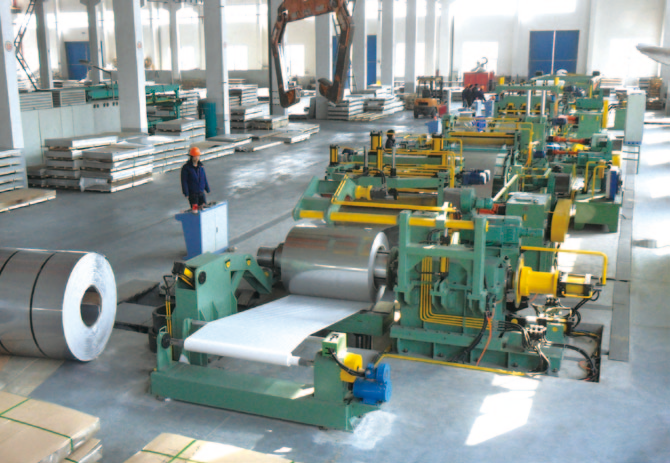
For a complete welded pipe project, the quotation may also include steel coil slitting line, auxiliary equipment, installation support, commissioning support and operator training. If these items are missing, buyers should ask whether they are excluded or only not listed yet.
This helps the buyer compare suppliers fairly. Without a clear scope, the lowest price may simply mean fewer items are included.
Compare quotations by scope, not only by total price
Two ERW tube mill quotations may look similar, but the included scope can be very different. One offer may include roll tooling, electrical control, spare parts and installation guidance, while another may quote only the main mill body.
Buyers should ask each supplier to list the main equipment, optional equipment, tooling scope, spare parts, delivery scope, installation support and after-sales service. This is especially important when the project may also need a steel coil slitting line, tube mill rolls, packing system or overseas commissioning.
A clear quotation makes the project easier to compare. It also reduces misunderstanding after order confirmation, especially when buyers are working across language, time zone and export document requirements.
Roll tooling and future size changes
Roll tooling has a direct influence on forming stability, pipe size accuracy and production changeover. If the factory plans to produce many pipe sizes, the tooling plan should be discussed early, not after the machine order is placed.
A practical supplier should review the full pipe size table and explain which rolls are required, which sizes may share a tooling plan and how future size expansion can be arranged.
For buyers who change sizes frequently, tooling design, roll storage, adjustment method and operator training can affect daily production efficiency as much as the main tube mill itself.
Workshop layout and factory conditions
Workshop layout is one of the most important parts of a pipe mill project. Buyers should confirm workshop length, width, crane height, power supply, foundation condition, raw material entry, finished pipe storage and operator access.
A simple workshop drawing is very useful. It allows the supplier to plan line direction, maintenance space, coil loading route, run-out area and future expansion possibility before manufacturing starts.
If the building is still being planned, the supplier can usually give basic layout suggestions. If the building already exists, the machine configuration should respect the actual space instead of forcing the factory to fit a standard drawing.
Pre-shipment inspection and acceptance
Before shipment, buyers should ask what inspection work can be done at the supplier factory. This may include checking main machine assembly, roller processing, electrical cabinet, component list, appearance, packing and container loading preparation.
For customized ERW pipe mill projects, not every production detail can be fully tested without the buyer raw material and final factory condition. Even so, a responsible manufacturer should explain what can be inspected before shipment and what will be adjusted during installation and commissioning.
Clear inspection communication helps the buyer know what to expect before the machines are loaded into containers.
Installation, commissioning and operator training
For overseas projects, installation and commissioning support can be as important as the machine itself. A new pipe mill needs correct line leveling, roll adjustment, welding setup, cutting synchronization and operator training.
Before placing an order, buyers should confirm the support method, engineer arrangement, remote communication, spare parts process and after-sales response. This helps reduce project risk after the equipment arrives.
If the buyer team has limited tube mill experience, training should be discussed early. A machine can only perform well when operators understand adjustment, tooling change, welding condition and daily maintenance.
After-sales service and spare parts
A tube mill line is long-term production equipment. Buyers should ask how the supplier handles spare parts, wear parts, technical questions, remote support and possible future upgrades.
Important spare parts may relate to welding, cutting, bearings, rolls, electrical components and hydraulic or pneumatic systems. The final spare parts list should be confirmed according to the selected machine model and project scope.
A professional supplier should help buyers understand which parts need regular attention and which parts can be prepared for smoother daily operation.
Questions to ask before choosing a China ERW pipe mill supplier
Ask whether the supplier can review your pipe size table before quoting. Ask what equipment is included in the complete line. Ask whether roll tooling, spare parts, steel coil slitting line, installation and commissioning are included or optional.
Ask what information is needed for model selection. Ask whether the supplier can provide a line layout direction. Ask how overseas installation support is arranged. Ask how the factory checks the machines before shipment.
The answers do not need to be complicated, but they should be clear. If the supplier can only repeat a product name and price, the buyer may not receive enough support for a real pipe mill project.
Red flags when comparing ERW pipe mill suppliers
Be careful if a supplier gives a final price without asking for pipe size, wall thickness, material or workshop layout. A useful ERW pipe mill proposal cannot be prepared from only one sentence.
Other warning signs include unclear equipment scope, no discussion of tooling, no installation plan, vague delivery terms, no technical parameters and no willingness to review the buyer project details.
For overseas buyers, another risk is choosing a supplier that cannot explain export packing, container loading, installation communication and after-sales support. The machine must arrive safely and be supported after arrival.
When a complete tube mill solution is better than a single machine quotation
Some buyers only need one replacement machine or a specific auxiliary unit. But many overseas buyers need a complete tube mill solution, especially when building a new pipe factory or adding a new product range.
A complete solution may include ERW tube mill line, steel coil slitting line, tube mill rolls and tooling, auxiliary equipment, workshop layout suggestion, installation support and operator training.
This does not mean every project needs the largest package. It means the supplier should help the buyer choose the right scope according to the actual factory plan.
Best next step after finding a possible supplier
After the buyer finds a possible China ERW pipe mill supplier, the next step should be a technical requirement exchange, not immediate price negotiation. Send the product range first and ask the supplier to explain the recommended route.
A good response should help the buyer understand whether the project needs an ERW tube mill line, a steel pipe making machine package, a direct forming square tube mill, a steel coil slitting line or a complete tube mill solution.
This process protects the buyer from choosing a machine that looks affordable but cannot support the target production after installation.
Information to send before requesting a quotation
To receive a useful quotation, send your pipe shape, round pipe OD range, square or rectangular tube size if needed, wall thickness, material, pipe length, application, target output, workshop size and whether this is a new factory or an existing line upgrade.
If you already have a workshop drawing, coil specification, product standard or target line speed, include it in the first communication. The more complete the information, the easier it is for the supplier to prepare a practical welded pipe production line proposal.
If some information is not decided yet, mark it as "to be confirmed based on project requirements". A serious tube mill manufacturer can help review the missing points and suggest what needs to be confirmed next.
How Zhongyue supports overseas ERW pipe mill projects
Zhangjiagang Zhongyue Metallurgy Equipment Co., Ltd. is located in Zhangjiagang, Jiangsu, China, and focuses on tube mill machinery, welded pipe production lines, steel pipe making machines, direct forming square tube mills, tube mill rolls and steel coil slitting lines.
For overseas buyers, Zhongyue can review pipe product requirements, discuss production route, prepare equipment configuration, suggest line layout direction and support manufacturing, assembly, pre-shipment checking, installation guidance and after-sales communication according to project requirements.
If you are comparing China ERW pipe mill suppliers, send your target pipe size, wall thickness, material, production capacity and workshop layout. The engineering team can help review whether an ERW tube mill line, steel pipe making machine, direct forming square tube mill or complete tube mill solution is more suitable for your project.
Final buyer takeaway
The best China ERW pipe mill supplier is not simply the company with the lowest first price. For overseas buyers, the better choice is usually the manufacturer that can understand the product plan, explain the equipment scope, support layout review, prepare a practical quotation and continue communication after shipment.
A clear supplier evaluation process helps protect the project budget and reduces production risk. Start with the pipe product plan, compare the complete scope, check real factory capability and ask for a technical proposal before making the final decision.
For equipment selection, visit ERW Tube Mill Line, Steel Pipe Making Machine, Direct Forming Square Tube Mill, Steel Coil Slitting Line or Tube Mill Solutions.